Running on EOS: The Operating System Behind ValueBuilt

Most property managers do not have a system. They have a to-do list and good intentions. Here is why we run on EOS and why that matters to your asset. Here is an uncomfortable truth about many property management companies. There is no real system supporting the way they operate. Things get done if someone happens to remember them. Issues get handled if they land on the right person’s desk at the right time. That approach may work for a while, but eventually a dropped ball can become an extended vacancy, unpaid rent, or a small repair that quietly develops into a much larger problem. We did not want to run that kind of company, and we certainly did not want to place your asset in the hands of one. That is why we built ValueBuilt on EOS from an early stage. It gives us a structured property management operating system that supports consistent decisions, clear responsibility, and measurable performance. What EOS actually is EOS stands for the Entrepreneurial Operating System and was made popular by the book “Traction.” It is a proven framework that helps businesses operate with greater discipline. Thousands of companies across different industries use it to clarify their vision, put the right people in the right roles, and maintain accountability through honest numbers. You do not need to understand every EOS term to recognize its value. EOS property management creates a clear difference between a company that simply hopes things go well and one that follows a system designed to keep work moving in the right direction. We manage by the numbers At the heart of EOS is a weekly scorecard. It includes a focused set of metrics that help reveal whether the business and the properties under management are performing as expected. These may include collections, vacancies, turn times, open work orders, and other important indicators. We track the numbers that matter for your property every week. This allows us to identify concerning trends while they are still manageable rather than discovering them after they have already affected performance. The old rule still applies. If something gets measured, it can be managed more effectively. Nothing gets to fester Every week, our team holds what EOS calls a Level 10 Meeting. It is a focused and structured meeting designed to surface issues and solve them rather than simply discuss them. Problems do not remain in someone’s inbox for a month. They are raised, reviewed, assigned, and resolved through a dependable weekly process. This consistent rhythm helps ensure that the matters affecting your property continue moving towards a clear resolution. Everyone knows who owns what EOS uses an accountability chart, so every responsibility in the company has exactly one clear owner. That sounds simple, but it’s the antidote to the “I thought someone else was handling that” problem that quietly plagues so many managers. For you, it means there’s never a question of who is responsible for your property. We move the big things forward Daily urgency can easily push meaningful improvement aside. EOS addresses this through Rocks, which are a focused group of priorities that the team commits to completing each quarter. These priorities help us improve the areas that matter instead of spending all our time reacting to whichever issue feels most urgent that day. This approach allows our systems-driven property management model to keep developing while daily property needs are still handled consistently. Why this matters for your property You do not need to study the framework to experience the results. Running on EOS means fewer dropped responsibilities, faster answers, and more consistent service regardless of which team member you contact. Everyone works from the same numbers, priorities, processes, and service standards. It also means a company that measurably gets better over time instead of slowly drifting. That discipline may be difficult to see from the outside, but it is one of the main reasons things get handled with us. It is also uncommon enough in this industry that it has become an important reason owners choose ValueBuilt and continue working with us. For owners seeking property management in Clinton, Iowa, our structured approach provides more than day-to-day oversight. It provides a dependable system built around accountability, visibility, and continuous improvement. To see what disciplined and systems-driven property management could look like for your portfolio, let us talk.
A Sign in the Yard Isn’t Marketing: How We Actually Fill Your Units
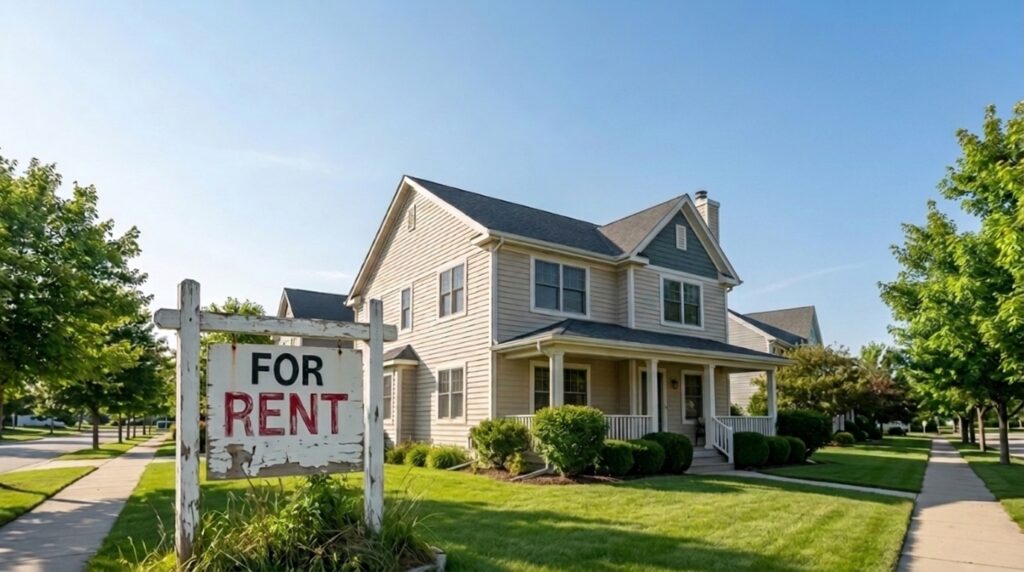
One online listing and a sign out front do not make a marketing plan. They are simply the bare minimum, even though owners are paying for much more than that. Ask most owners how their property manager markets a vacancy, and you will often hear the same answer. A sign goes in the yard, and the property is posted on one rental website. That is the entire plan. Filling your units quickly with qualified residents is a key part of effective property management because vacancy directly affects your rental income. We believe rental property marketing deserves far more attention than the bare minimum because there is a clear connection between how a unit is promoted and how much the owner ultimately earns. Marketing is how vacancies end A vacant unit costs you every single day it sits, so anything that fills it faster pays for itself almost immediately. But the cost of weak marketing goes well beyond a few extra empty weeks. When fewer people see your listing, you get fewer applicants, which means a thinner pool to screen from and more pressure to lower the rent or take the first warm body that applies. Both of those decisions can cost you for the entire length of the next lease. Strong marketing flips all of that. More eyes mean more applicants, which means you can hold your price and actually choose a qualified resident rather than settling out of desperation. What real marketing actually looks like Effective rental listing marketing involves more than uploading a few photos and waiting for inquiries. It requires the right presentation, wider visibility, timely promotion, and consistent follow-up with prospective renters. Why we brought in a partner Here is the honest truth. Most property managers are not marketers, and pretending otherwise does not serve owners. So we do not dabble. We partner with people who do this for a living, so our lease-up marketing is backed by genuine expertise. Our partner ROAR CXO brings real marketing horsepower to the process, with the kind of strategy and reach most local managers simply do not have and would not know how to build. That means your vacancy gets treated like the revenue problem it actually is by people whose whole job is solving it. The payoff for owners Better marketing means shorter vacancies, stronger applicant pools, and far less pressure to slash rent just to get someone in the door. It is one of the clearest places where the right manager pays for themselves several times over, and it is exactly the part most owners have never actually been given. For owners looking to fill a vacant rental in Clinton, Iowa, better marketing can create more visibility, more interest, and a stronger pool of potential residents. If filling your units has felt slow or passive, the process does not have to stay that way. Let us talk about what professional marketing could do for your vacancies and your bottom line.
The Hidden Cost of Slow Turns
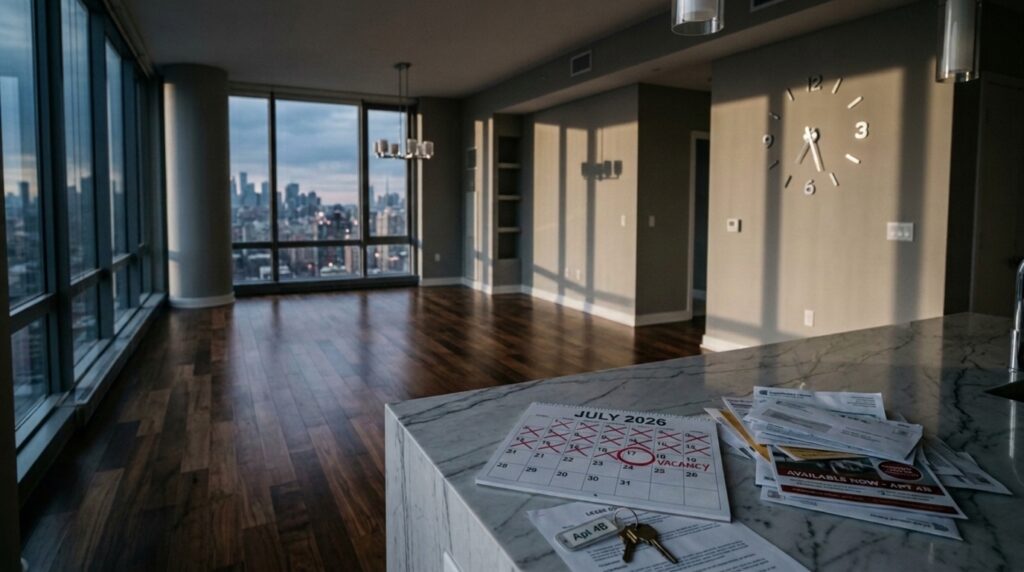
Every day a unit sits empty between residents is rent you will never get back. Here is the real math and how we shrink that loss. Vacancy is the most expensive thing that can happen to a rental, and the worst part is how quietly it happens. There is no big red bill in the mailbox demanding attention. Instead, the meter keeps running in the background while an empty unit earns nothing and continues to cost you. The longer the turn between one resident moving out and the next moving in, the more it quietly drains, yet most owners never calculate the full vacancy cost. Do the math on a single slow turn Say you have a unit that rents for $900 a month. If your turn takes three weeks longer than it should, that is roughly $675 in rent you will never recover. It is simply gone after one turn on one unit. Now add the utilities you are covering on an empty unit, the extra exposure a vacant property has to break-ins and undiscovered leaks, and the simple fact that the unit is doing nothing for your loan payment in the meantime. The real cost of those three extra weeks lands well north of the rent alone. Multiply that across a few units each year, and slow turns quietly become one of the biggest leaks in your returns. They can cost more than many of the line items owners actually spend their time worrying about. Why turns drag In most cases, the problem is not one major failure. It is a series of small delays stacked end to end. Nobody starts planning the turn until the resident is already gone. Work happens one step at a time instead of in parallel. A vendor cannot come out for ten days. The unit gets cleaned, then someone notices the paint, and only then does someone schedule the carpet. Marketing does not go live until the place is finally ready. Each delay seems minor on its own. Once those delays stack up, however, they can turn a one-week job into a six-week vacancy. That is why reducing turn time in property management starts with planning before the unit is empty. The goal is to remove small delays early, so they do not stack into a longer vacancy. How we compress the turn At ValueBuilt, we treat every turn as a coordinated process that begins before the unit becomes vacant. Here is how we reduce unnecessary delays and get the property ready for its next resident. Done right, a turn is not a scramble that begins after move-out. It is a planned process that is already well underway before the keys even come back. This disciplined approach helps reduce rental vacancy by limiting unnecessary days without rental income. Speed without cutting corners Fast turns only help when the work is done properly. A unit rushed back to market with sloppy repairs may turn over again, leaving you to absorb the cost twice. Our process is quick because it is organized, not because it skips steps. Clear inspections, defined scopes, and reliable vendors mean the unit is genuinely ready, not simply emptied. Making a property rent-ready in Clinton, Iowa requires repairs, cleaning, inspections, and marketing to work together. When the process is disciplined, speed and quality stop being a trade-off. The upside compounds Tighter turns do more than save the rent you might otherwise lose. They improve occupancy, which can strengthen your net operating income month after month and year after year. Pair a fast turn with effective marketing and proper pricing, and your property simply spends more of the calendar earning income. Over time, that is the difference between a unit that continually leaks money and one that quietly performs. If your turns have been dragging, that is real income you can get back. Let us talk about what a tight and well-run turn process could do for your bottom line.
If You’re Not Getting Reports, You’re Flying Blind

Owning rental property without real reporting is like running a business and never once looking at the books. When owners come to us from another manager, I ask a simple question. How is your property actually performing? More often than not, they can’t tell me. These are smart people who’ve invested real money, but nobody ever showed them what was really happening. They’ve been sending money out every month and getting almost nothing back in the way of real information, and they’ve quietly gotten used to it. I lived that exact frustration myself before we started ValueBuilt. I worked with the managers in our market and never once received a report worth the name. That’s a big part of why property management reporting sits at the very center of how we operate today. What you can’t see, you can’t fix Problems love the dark. A unit that sat vacant a few weeks too long, a resident who’s quietly fallen two months behind, maintenance costs that keep creeping up on the same property. None of it announces itself. Without clear reporting, you only find out when it’s big enough to hurt, whether that means a surprise eviction, a repair bill that should have been caught months earlier, or a year that somehow made far less than it should have. With clear rental property reporting, you catch the small stuff while it’s still small and cheap to fix. That isn’t just nice to have. Over a full year, it’s often the difference between a property that performs and one that limps along. What a real owner report actually shows A useful report should give owners more than surface-level numbers. Real transparency in property management means showing the details that affect cash flow, risk, and long-term performance. None of that is exotic. It’s the basic information any owner should expect about their own asset. And yet it’s exactly what most managers never hand over. Why most managers don’t do it Usually, there are two reasons. Some simply don’t have the systems to produce clean reporting. Their books are a mess, and their software is an afterthought, so they share as little as possible to avoid exposing it. Others would just rather you didn’t look too closely at vacancies, slow collections, or where the maintenance money went. Either way, you’re the one flying blind, and it’s your asset and your money on the line. Transparency is the product With us, you don’t have to chase anyone for answers. You can see how your property is performing on a regular cadence, in plain numbers, and those numbers are backed by a triple tie-out reconciliation, so you know they’re actually right. Not just plausible. Understanding how your investment is doing isn’t an extra we tack on. It’s the heart of the job. Frankly, we’d rather you know exactly how your property is doing and hold us to it. That’s how it should work when it’s your money. If you haven’t seen a real report from your current manager in a while, or ever, that tells you something. Let’s talk about what clear, honest reporting looks like for your portfolio.
Owner-Operated and Locally Rooted: Why That Matters for Your Portfolio

What you actually get when the people managing your property live in the same market and answer the phone. There’s a quiet shift happening in property management in Clinton, Iowa. Big national companies are buying up the local shops, rolling them into regional call centers, and managing properties from hundreds of miles away. On paper, it looks efficient with more scale, more software, and lower overhead. In practice, for the owner, it usually means slower answers, less accountability, and a manager who has never once driven past your building or met the people living in it. We took the opposite approach on purpose. ValueBuilt is an owner-operated property management company in Clinton and the Quad Cities. We’re not a branch office reporting to a corporate parent in another state. We’re the people who own the company, live in the market, and answer for the work. For your portfolio, that difference shows up in ways that hit your bottom line. Decisions made by people who know the block Real estate is local right down to the street. As a local property manager in Clinton, we know which Clinton neighborhoods lease fast and which ones take patience. We know what comparable units actually rent for. We use real local data, such as what a nearby property leased for last month, instead of relying on numbers from a national website. We know which vendors show up and which ones don’t, which roofers are worth calling in January, and what our local rental inspectors expect before they ever walk in the door. That kind of knowledge can’t be loaded into a national playbook, and it can’t be Googled by someone three states away. It comes from being here, year after year, with our own money in the same market. It’s the difference between pricing a unit correctly the first time and watching it sit empty while someone guesses. When something goes wrong, you know who to call With a national manager, a problem becomes a ticket in a queue, handled by whoever is next available in a city you’ve never visited, and you re-explain your situation every time you call. With us, you have real people who already know you and your property. Whether it is a burst pipe at nine at night, a tenant dispute, or a question about a repair bill, your issue is handled by someone accountable, not passed through a system and forgotten. That accountability is the entire reason you hire a manager in the first place. If you’re going to hand over your asset, you should know exactly whose name is on it. We’re owners in this market too Here’s the part most managers can’t honestly say: we own and operate rental properties in eastern Iowa, the same market where we manage properties for you. We feel the same vacancies, the same turn costs, the same Iowa winters, and the same tax bills. When we recommend a rent, a repair, or a renewal strategy for your asset, it’s a decision we’ve had to make for our own doors first. That alignment changes everything. We’re not selling you services you don’t need or quietly cutting corners that come back to bite you, because we live with the exact same consequences you do. Our incentives and yours point in the same direction. Local doesn’t mean small-time Being locally rooted doesn’t mean we run the business on sticky notes and good intentions. We pair that local knowledge with national-caliber systems, modern property management technology, and disciplined processes we’ve learned from top operators across the country. You get the responsiveness and judgement of a local team, backed by the systems, resources, and expertise of a Quad Cities property management company built to scale. If your property is being managed from far away, or honestly, barely managed at all, it may be time to talk to a team that actually lives where you invest. We’d be glad to show you what the difference looks like with your own portfolio.
We’re Investors First: Why ValueBuilt Was Born Out of Necessity

We’re Investors First: Why ValueBuilt Was Born Out of Necessity How a frustrated rental owner in Clinton built the property management company he wished he could have hired. I didn’t set out to start a property management company. I set out to own a rental property. Like a lot of investors in Clinton and across eastern Iowa, I bought my first doors because the math made sense. Solid cash flow, real assets, and a path to build something lasting for my family. What I didn’t count on was how hard it would be to find anyone to manage those properties the way I’d manage them myself. So I tried the local options. When I looked at property management in Clinton, Iowa, from an owner’s point of view, the same gaps kept showing up. The Problem Nobody Was Solving Here’s what being an owner taught me about the property management most owners are actually paying for. I never got a report. Not a real one. I’d send money out every month and have no idea how my own property was performing, what it rented for, how long it sat vacant, or where my dollars went. If I wanted to know, I had to chase someone down to find out. Turns dragged on for weeks. Every empty day was rent I’d never get back, and nobody seemed to feel the urgency I felt. That’s because it wasn’t their money on the line. It was mine. And the marketing was a sign in the yard and a single listing online. That was it. I was paying someone to fill my units, and the effort stopped at the bare minimum. None of it was malicious. It was just the way property management had always been done around here. No systems, no transparency, and no real sense that the person managing the asset had ever sat in the owner’s chair. I figured there had to be a better way. When I couldn’t hire it, I decided to build it. Built Out Of Necessity, With People I Trust ValueBuilt didn’t come from a business plan on a whiteboard. It came out of necessity. I sat down with a few good friends and partners, people I trust, who understood real estate and operations, and we started building the management company I wished I could have hired. Not a side hustle. A real operation, designed from the owner’s point of view, with the systems and the discipline I’d been missing. That meant a few things were non-negotiable from day one. We Didn’t Figure It All Out Alone I’ll be honest. We didn’t get it all right at first. The real turning point came when we stopped trying to figure everything out on our own. We hired a coach. We studied how the best property managers in the country actually run their businesses, operators in markets far bigger than ours, with far more sophisticated playbooks, and we brought what worked back home to Clinton. That’s where a lot of what makes ValueBuilt different came from. We run on EOS, a real operating system that keeps the whole team accountable to the same scorecard and the same priorities. We brought in lean, process-driven thinking so costs stay predictable and nothing falls through the cracks. And we built a technology stack that does the heavy lifting, so our people can focus on the work that actually needs a human. We took the best ideas from operators all over the country and tuned them for the realities of our market. Older housing stock, a tighter rent band, and owners who deserve better than they’ve been getting. This is also why our approach to eastern Iowa rental management is built around local realities instead of a one-size-fits-all playbook. Why We’re Opening This Up To Our Community For a while, this model just served our own portfolio. But the more it worked, the more I kept thinking about every other owner in Clinton and the Quad Cities sitting exactly where I was. Frustrated, in the dark, and stuck with options that don’t measure up. That’s who we want to serve. We’re not a national brand running your property from a call centre three states away. We bring owner-operated property management to your market because we built this from the same problems we faced ourselves. When we make a recommendation about your asset, it’s the same recommendation we’d make about our own, because we’ve made it about our own. That’s what investors first really mean. We don’t think like a vendor. We think like an owner because we are one. Your returns, your assets, your peace of mind. We’re on the same side of the table. If you own rental property in Clinton or the Quad Cities and you’re tired of flying blind, let’s talk. I’d be glad to show you what Quad Cities property management looks like when it’s built by someone who’s been in your shoes.
Rent Estimate Calculator: Find Out What Your Rental Property Could Earn

If you’re wondering how much your rental property could generate each month, our Free Rent Estimate Calculator is a great place to start. Whether you’re preparing to rent out your first investment property or reviewing an existing rental, understanding your property’s estimated rental value is an important first step toward maximizing your return. Why Estimate Your Rental Value? Setting the right rental price can help you: Pricing a property too high can lead to extended vacancies, while pricing it too low may leave money on the table. How Our Calculator Works Our Rent Estimate Calculator provides a quick rental estimate based on key property details, including: Simply enter your information, and you’ll receive an estimated rental range in just a few moments. Get a Free Rental Estimate The calculator is designed to provide a helpful starting point. Every property is unique, and factors such as location, condition, amenities, and current market demand can all influence rental value. For a more accurate recommendation, our team can provide a Free Rental Analysis with no obligation. Ready to See What Your Property Could Rent For? Use our Free Rent Estimate Calculator today to get an instant estimate, then connect with our team for a personalized rental analysis and professional property management advice.