National operators have scale and software. Here’s why a local owner-operated team still wins for owners in markets like ours.
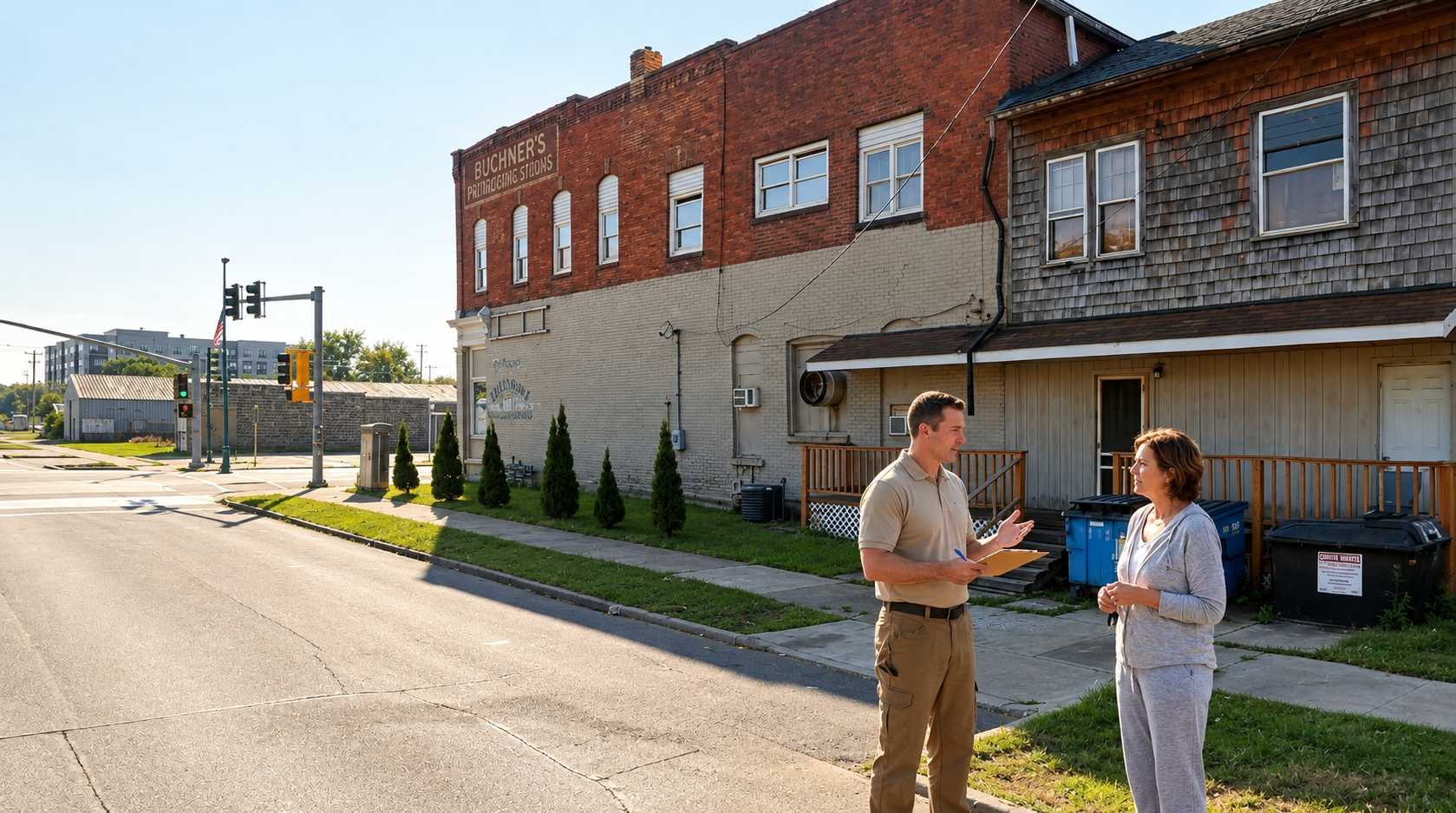
Drive through Clinton, and you’ll see the kind of housing this town is built on. Solid older homes, classic small multifamily properties, and brick buildings that have been here for generations all shape the local market. Then look at the headlines in real estate, and you’ll see a different story. Giant institutional operators are buying up tens of thousands of doors, armed with national scale, deep capital, and slick software.
A lot of local owners wonder how they’re supposed to compete with that. The answer is that in a market like ours, local ownership and management can hold its own just fine and often come out ahead.
What the giants are actually good at
Let’s give them their due. Institutional operators have real advantages, including enormous scale that spreads costs, access to cheap capital, big technology budgets, and whole departments for things a local shop handles with a few people.
On paper, that’s formidable, and in certain markets, such as sprawling Sun Belt metros full of nearly identical newer homes, that model runs efficiently. When properties are highly similar, a centralized and standardized system can work well. We’re not pretending that advantage isn’t real.
Where the Model Breaks Down in Clinton
But that machine is built for uniformity, and Clinton isn’t uniform. Our housing stock is older and full of quirks. Every building has its own history, systems, and maintenance needs. A national playbook designed for identical newer homes doesn’t always fit a century-old multifamily property that needs someone who actually knows the building.
Worse, institutional landlords often operate at a distance, with decisions made in another state, residents talking to a call center, and nobody on the ground who’s ever seen the property. In a market that runs on local knowledge and relationships, that distance is a real weakness, not a strength.
Local vs National Property Management in Clinton
This is exactly the ground where we have the edge. We know this market down to the neighborhood, and we know how to care for older buildings because it’s what we do every day.
When something needs a decision, it’s made by people here who know the property rather than being sent through a queue several states away. Residents reach actual humans who know them. That local familiarity can make everyday property decisions faster, more informed, and better suited to the building itself.
Because we’re owners ourselves in this market, we also bring genuine care to each property instead of treating it as one anonymous unit in a spreadsheet of fifty thousand. That is one of the key advantages of working with an owner-operated property manager. Scale can’t manufacture that kind of attention.
Local Doesn’t Mean Behind the Times
Here’s the part that surprises people. You don’t have to give up the giants’ best tools to go local.
At ValueBuilt, we’ve deliberately built the same kind of technology, systems, and discipline the big operators rely on, including modern software, real reporting, automation, and proper accounting.
So owners don’t actually face a choice between sophisticated and local. With us, you get both, including institutional-grade systems and a local team that answers for the work. That combination is tough for either a sleepy local shop or a faraway giant to match.
The Right Home for Clinton’s Classics
Clinton’s older homes and small multifamily properties are the backbone of this rental market, and they deserve management built for them rather than a one-size-fits-all system designed for somewhere else.
These buildings reward local expertise, hands-on care, and someone who actually understands what makes them work. That kind of knowledge is especially valuable when managing properties across Clinton, Iowa, where buildings can vary widely in age, condition, and day-to-day needs.
If you own classic Clinton property and you’re not sure whether to go with a faraway national name or a local team, let’s talk. We think the right home for this town’s buildings is a manager who knows the market, understands the properties, and is invested right alongside you.